Volleyball Toolbox

  • Home
  • Drills
  • Systems
  • Sports Performance
  • Practice Planning
  • Intangibles
    • Leadership
    • Mental Skills
    • Team Building
  • Shop
  • Archives

Stop Getting Beat at the Net: Essential Blocking Footwork for Volleyball

November 25, 2025 by

Andrew Strick, Assoc Head Volleyball Coach, Lamar

This video is a segment from one of the 120 Videos in Glazier Drive Basketball.  Explore coaching clinic replays, practice plans, skill development videos, and more.

Full video on Glazier Drive: Volleyball Blocking Skills & Tactics

VOLLEYBALL BLOCKING FOOTWORK TECHNIQUES

This instructional video covers two fundamental blocking footwork patterns for volleyball players at the net.

SHUFFLE TWO

The shuffle two is a short, lateral two-step movement toward the antennas. It’s the simplest blocking footwork technique, making it ideal for inexperienced players or those with great size. The move keeps the hips perpendicular to the net and requires minimal distance coverage.

Key advantages include its simplicity, ease of learning, and effectiveness for tall players like Matt Anderson (6’11”) on the men’s national team who can leverage their frame with minimal movement. Players can adjust the distance of their two steps based on where the ball is set, allowing them to position themselves optimally.

The main limitations are the short coverage distance, which may create reading challenges and potentially force teams into man-on-man defensive schemes. The video includes examples from Micah Christensen and Matt Anderson (Team USA) and Allan from Brazil, who demonstrates how taller players can even dive back into the court after using this footwork.

SHUFFLE THREE

The shuffle three adds a hop to the basic shuffle, creating a step-hop-jump sequence. This pattern is particularly effective in read situations where blockers need to help in the middle before moving out to their primary pin attack responsibility.

Benefits include better vertical explosiveness (similar to a double jump in basketball), greater lateral coverage, and versatility for defending multiple attacking options. However, inexperienced players often jump too far laterally rather than straight up. Coaches should emphasize staying inside the court rather than drifting outside, as most attacks come toward the center.

The video shows Maddie Skinner (University of Texas/National Team) demonstrating this technique, including a common error of jumping too far outside when the ball travels toward the middle of the court. Players may also default to this move when not paying attention during rallies.


Filed Under: Skills, Uncategorized

Streak Drill

October 23, 2025 by

In this video Coach Renee Saunders demonstates her Streak Drill.

SUMMARY
The video presents a volleyball coaching session focused on the “Streak” drill, aimed at improving hitting, rally consistency, and competitive mindset. The coach explains the rules clearly, emphasizing energy, effort, and communication as central components of success. The goal of the drill is for one side to achieve three consecutive kills, testing players’ ability to maintain focus and intensity under pressure. Throughout the session, the coach reinforces positive habits, provides real-time feedback, and keeps the energy high to simulate game-like conditions. The drill also serves as a conditioning exercise, challenging both physical stamina and mental toughness.

HIGHLIGHTS
Introduction of the “Streak” drill to enhance hitting precision and competitive focus.
Designed to be run both in-system and out-of-system, improving player adaptability.
Heavy focus on hustle, effort, and communication during play.
Win condition: The first side to achieve three consecutive kills.
⚡ Encourages fast play, quick reactions, and sustained intensity.
Promotes mental resilience when facing adversity or losing momentum.
Coach provides continuous feedback, motivating players to stay sharp and confident.

KEY INSIGHTS
COMPETITIVE SKILL DEVELOPMENT:
The “Streak” drill simulates game momentum and pressure, helping athletes maintain performance consistency while pursuing consecutive successful plays.

VERSATILITY AND REALISM:
Running the drill in both structured and improvised scenarios builds adaptability, teaching players to handle unpredictability during real matches.

PHYSICAL AND MENTAL CONDITIONING:
The drill demands endurance and sustained focus, enhancing players’ ability to perform under fatigue and mental strain.

EFFORT AND COMMUNICATION:
The coach repeatedly emphasizes the value of verbal communication, teamwork, and visible hustle—skills as vital as technical execution.

MENTAL RESILIENCE:
By addressing the emotional challenge of being on the losing side, the coach fosters a mindset of persistence, emphasizing that effort and attitude define success.

⚡ PACE AND PRESSURE TRAINING:
The drill’s intensity mimics real match speeds, sharpening reflexes, decision-making, and competitive instincts.

FEEDBACK-DRIVEN COACHING:
Immediate praise and correction from the coach keep players motivated, reinforcing desired behaviors and improving focus throughout the session.

OVERALL TAKEAWAY
This session demonstrates how a single, well-structured volleyball drill can integrate technical training, conditioning, mental toughness, and teamwork. The “Streak” drill exemplifies an engaging, high-energy approach that builds both skill and resilience—key components of elite volleyball performance.

This clip is taken from a recent clinic. For information about how to gain access to the entire presentation click the following link: Offensive Drills That Build Standards, Energy & Team Identity


Filed Under: Drills, Uncategorized

Receive to Target Drill

October 23, 2025 by

In this video Coach Jim Nichols of the Syracuse Volleyball club teaches a receive to target drill focused on improving the three-person serve receive technique with an emphasis on communication, positioning, footwork, and readiness.

Coach Nichols introduces a structured drill where players call out “mine, yours, in, out” to communicate ball ownership, open their body position to the ball immediately after calling it, and then pass accurately to a target (the coach). The drill requires players to hand the ball to the coach rather than throw it, reinforcing control and precision.

Key aspects include the importance of opening the body toward the ball to prepare for passes, avoiding travel towards teammates to maintain court spacing, and understanding who is responsible for each ball. The drill stresses quick decision-making and movement, teaching players to pivot instead of sliding and to always maintain focus on the ball, especially when it hits the net or dribbles over. The coach introduces competition to increase engagement, rewarding successful consecutive passes to the target and encouraging players to be aggressive and dive for balls when necessary.

Throughout the drill, the coach highlights the importance of positive reinforcement, recognizing good habits such as proper footwork, good communication, and hustle. The ultimate goal is to make these behaviors habitual so players react instinctively during matches, improving their serve receive efficiency and overall team defense.

Highlights

  • Emphasis on clear communication: Players must call “mine, yours, in, out” to avoid confusion.
  • Proper footwork is critical: Pivoting over sliding and shuffling over crossing feet ensures readiness.
  • Precision passing: Players hand the ball to the coach as a target, reinforcing control.
  • Quick body positioning: Opening to the ball immediately after calling it avoids travel and confusion.
  • ‍♂️ Hustle and readiness: Players are encouraged to move aggressively, dive for balls, and maintain focus.
  • Positive reinforcement: Coaches reward good habits to build confidence and consistency.
  • Competitive element added: Tracking consecutive successful passes increases motivation and game-like intensity.

Key Insights

  •  Communication is foundational: The drill’s first step—calling “mine, yours, in, out”—is crucial for team coordination. This verbal cue system minimizes hesitation, ensuring each player knows their role instantly. In game situations, this clear communication prevents collisions and missed balls, which are costly errors. By practicing this consistently, players internalize the importance of assertive and timely communication on the court.
  •  Opening the body to the ball improves passing accuracy and court coverage: The coach emphasizes that players must “open” their bodies as soon as they call the ball, meaning to position their torso and shoulders toward the ball’s trajectory. This increases passing accuracy by aligning the player’s platform with the ball’s path and also prevents players from drifting into teammates’ space, maintaining optimal court coverage. This habit reduces missed passes and confusion about ball responsibility.
  • ‍♀️ Efficient footwork underpins successful serve receive: The coach instructs players to pivot rather than slide or cross their feet. Pivoting allows players to change direction quickly without losing balance or foot positioning, which are essential for reacting to unpredictable serves. Shuffling instead of crossing feet maintains a stable base and readiness to move, ultimately improving reaction times and consistency in serve reception.
  •  Controlled passing to the target builds precision and trust: Instead of tossing the ball, players must hand it to the coach, which emphasizes control over power or speed. This disciplined approach ensures players focus on accurate ball placement, which is crucial in serve receive to set up effective offensive plays. This also fosters trust between teammates, as consistent, accurate passes allow hitters and setters to execute plays reliably.
  • ‍♂️ Aggressiveness and hustle are critical for ball control: The coach encourages players to “dive for the ball” and chase down every opportunity, reinforcing that effort can often compensate for imperfect positioning. This mentality not only increases the team’s chances of keeping the ball alive but also builds a culture of resilience and determination. Players who habitually make these efforts can change the momentum of matches by making seemingly impossible saves.
  •  Positive coaching and reinforcement accelerate skill acquisition: The coach’s strategy to immediately reward correct technique and hustle (e.g., “outer girl” praise) helps players internalize good habits and boosts their confidence. Positive reinforcement creates an encouraging learning environment where players are motivated to repeat successful behaviors. This approach is more effective than simply pointing out mistakes, as it builds mental resilience and a growth mindset.
  •  Adding competitive elements enhances drill effectiveness: By introducing a challenge to see how many consecutive balls can be passed to the target, the coach increases player focus and simulates game pressure. Competition elevates the intensity and realism of the drill, making players more engaged and invested. This also helps players learn to perform under stress, a critical skill for high-stakes match situations.

Overall, the drill encapsulates a holistic approach to serve receive, blending technical skill development with mental and physical preparedness. It highlights how fundamental elements—communication, body positioning, footwork, and effort—combine to create effective team defense and ball control. The detailed coaching cues and progressive challenges ensure players not only learn the mechanics but also develop the mindset needed for high-level volleyball performance.

For more great coaching tips,  check out the Syracuse Volleyball Club’s YouTube Channel

The YouTube video below has audio, so please make sure that you volume is turned up


Filed Under: Drills, Uncategorized

Left vs Left Drill

October 16, 2025 by

In this video Coach Mike Lingenfelter demonstrates his Left vs Left Drill.

Coach Lingenfeltger explains that this is a competitive drill. The purpose is to “beat the tar out of them,” focusing on scoring and real-game execution.

SCORING RULES
Only the left-side players can score points. While other players participate, no points are awarded for their actions. The scoring emphasizes accountability and performance from one specific position group.

DRILL EXECUTION

Players compete left vs. left, with the coach emphasizing aggression and situational awareness—“get up and rip it,” “get a swing.” The focus is on maintaining competitive energy, following the scoring rules, and improving finishing ability.

VARIATIONS AND EXTENSIONS

The coach explains that similar formats can be applied to middle vs. middle and right vs. right matchups, mirroring real-game alignments. The team typically runs a three-set rotation, but the concept remains consistent: position-specific competitive reps.

COACHING POINTS

The emphasis is on learning through competition, rewarding the correct execution (“that’s learning right there”) and reinforcing that improvement happens under pressure. The coach values intensity, position discipline, and developing scoring instincts.

For more great drills from Coach Lingenfelter check out his instructional coaching course here: Competitive Team Drills that Create Culture

The YouTube video below has audio so please make sure that your volume is turned up.


Filed Under: Drills, Uncategorized

The World is not Fair and What Got You to Good Won’t Get You to Great

December 5, 2022 by


Teamwork Intelligence Conversational Exercise


The following questions are intended for leadership conversation involving coaches and players. The deeper your conversation goes the closer and clearer you get to understanding the heart and mind of each team member. The deeper the better; adverse incidents happen daily—it’s a guarantee.   


What Can You Do When Something Unfair Happens?  

Let’s Talk About It!

A) Accept the fact that the world is not fair.

  • Conversation Starters:
    What do you mean by the word being fair?
    Should you accept the fact that the world is not fair?

B) The most important thing to remember when something you think is unfair happens to you is to not dwell on it.

  • Conversation Starters
    How do you dwell on adversity?
    Is there any way the world could be made fairer?

C) When something unfair happens to you, emphasize what you have rather than what you lost.

    • Conversation Starters:
      If you can’t make the world completely fair, how can you deal with it?
      Explain this sentence and apply in your team situation: Successful and happy players and coaches never dwell, at least not for long. Such coaches and players are too busy building a team.
Click here

download your FREE exclusive ebook from Dr. Cory Dobbs

What Got You to Good Won’t Get You to Great

Some coaches are more talented than others. Pause for a moment.

That’s a fact of team sport life that few coaches would dispute. The challenge is how to develop the coaches (head coach or assistant) who appear to have the highest potential. So you might be asking yourself, “How do I go about developing my coaching talents?”

Don’t wait. If you’re ready to put forward the resources needed to become a rising star in the coaching ranks, take action.

For the past 20 years, I’ve been working with coaches and athletes in the areas of leadership and team building. During this time I’ve noticed a deficit in time, effort, and energy when it came to identifying and developing high potential coaches. It seems as if excellence in leadership is a given. But it’s not! You don’t become a high–potential coach by merely “putting in the time.” Just working hard isn’t the x-factor. Neither is high potential a natural gift.

I’m helping high achievers and high potentials become self-aware and increase their personal effectiveness. If you’ve got a deep commitment to excellence, building right relationships, guiding with influence and accelerating change, let’s talk.

I’m looking for high-potential coaches with a desire to be mentored one-to-one by me. My coaching program is for those coaches willing to pay the price, ready to invest in developing their career for the long-term. If you are interested in talking about how you can go from high potential to high achievement—let’s talk. [Cory 623.330.3831]

Sample of What You Will Learn
-Deep Coaching: Inspiring Others to High Performance
-Humility is not Optional: It’s a Necessity
-What Coaches Need to Hear
-Entering the High Impact State of Coaching
-The Social Context: Intrapersonal and Interpersonal Dynamics
-Conquering Denial
-Managing Envy

Kind regards,
Dr. Cory Dobbs
Ready to Coach You!
(623) 330..3831

New to the Second Edition of Coaching for Leadership!
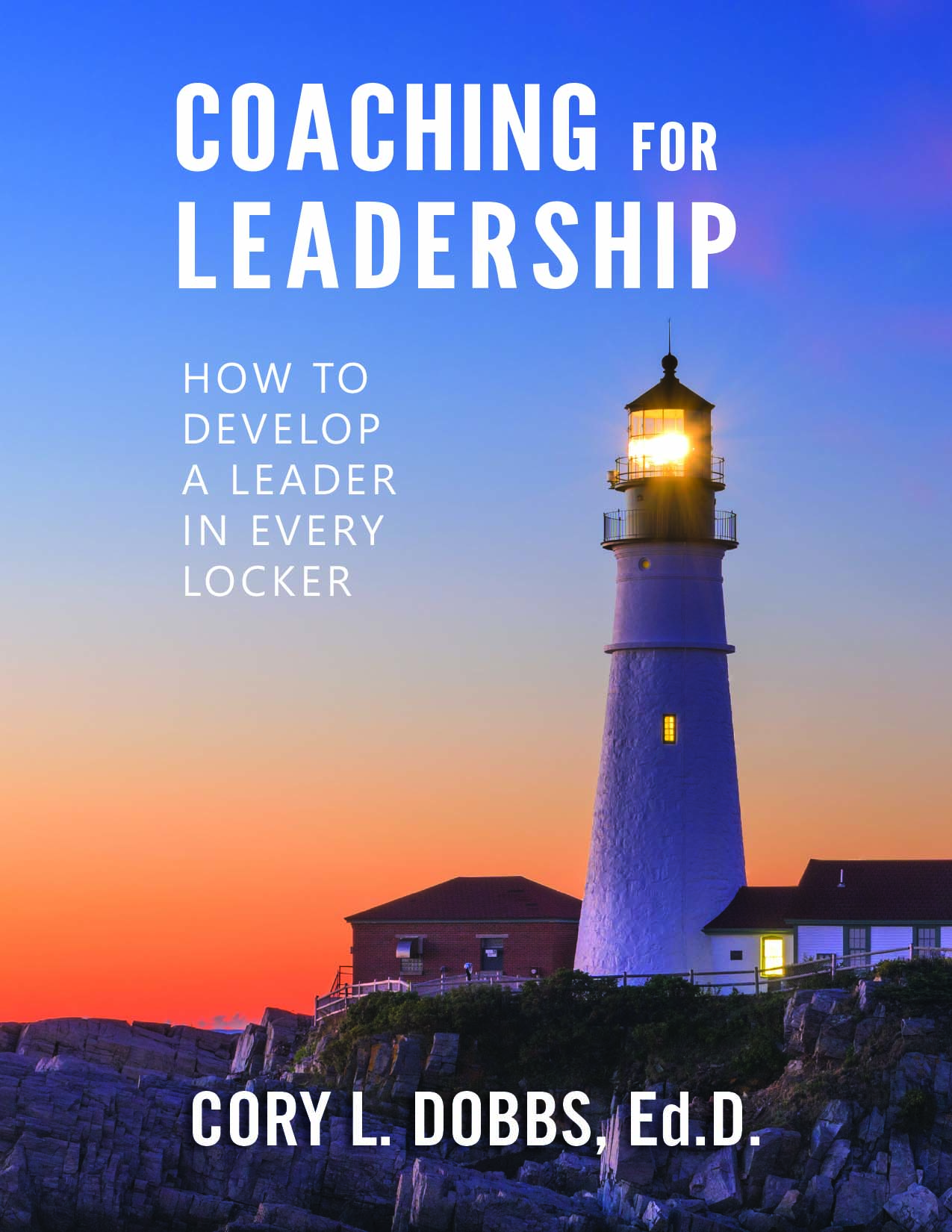
We are pleased to announce a new chapter to the second edition of the best-selling Coaching for Leadership. The chapter, The Big Shift: Unlock Your Team’s Potential by Creating Player-Led Teambuilding, connects the previous edition of this book to its origin, as well as to the future of team sports.

The new chapter sets forth a practical and applicable agenda for change and improvement. The reader is introduced to seven vital elements of change; seven shifts of traditional mental models that lead to the new core principles necessary for creating a player-led team culture. Click here for more information about Coaching for Leadership

About Cory Dobbs, Ed.D.

Cory Dobbs is the founder of The Academy for Sport Leadership and a nationally recognized thought leader in the areas of leadership and team building.  Cory is an accomplished researcher of human experience. Cory engages in naturalistic inquiry seeking in-depth understanding of social phenomena within their natural setting.

A college basketball coach, Cory’s coaching background includes experience at the NCAA DII, NJCAA, and high school levels of competition.  After a decade of research and development Cory unleashed the groundbreaking Teamwork Intelligence program for student-athletics. Teamwork Intelligence illuminates the process of designing an elite team by using the 20 principles and concepts along with the 8 roles of a team player he’s uncovered while performing research.

Cory has worked with professional athletes, collegiate athletic programs, and high schools teaching leadership and team building as a part of the sports experience and education process.  As a consultant and trainer Dr. Dobbs has worked with Fortune 500 organizations such as American Express, Honeywell, and Avnet, as well as medium and small businesses. Dr. Dobbs taught leadership and organizational change at Northern Arizona University, Ohio University, and Grand Canyon University.


Filed Under: Leadership, Uncategorized

  • 1
  • 2
  • Next Page »
  • Team Building
  • Mental Skills
  • Leadership
  • Practice Planning
  • Sports Performance
  • Systems
  • Drills
  • Archives

© Copyright 2025 Athletic Performance Toolbox

Design by BuzzworthyBasketballMarketing.com

Privacy Policy

Hurry!

Get instant access to Dr. Cory Dobbs' exclusive Ebook now

Leave your email below to get right now the download for free:

x