Volleyball Toolbox

  • Home
  • Drills
  • Systems
  • Sports Performance
  • Practice Planning
  • Intangibles
    • Leadership
    • Mental Skills
    • Team Building
  • Shop
  • Archives

Team Leadership Model

December 12, 2017 by

The Team Leadership model creates an environment in which members are accountable not just to the coach, but to the team as a whole. If you are willing to give up some control, and believe that all team members can inspire each other, your team will reap the benefits

This article can also be found on the Coaches Toolbox, a collection of free resources for coaches of all sports

Cory Dobbs, Ed.D., The Academy for Sport Leadership

One thing I know is true: everyone I meet has more learning and doing capacity than I am aware of, just like the mighty oak hidden in every tiny acorn.  My work with The Academy for Sport Leadership has led me to conclude that a shared leadership system is far more productive than the hierarchical model embodied in the traditional team captain model.  I call the participative model, which rests on the practice of mutual learning, the Team Leadership Model.

The Team Leadership Model promotes the processes of team leadership and team building as growth opportunities.  It advances the assumption that all members have the ability to inspire others, to reflect on their actions, to increase self-awareness and to leverage their relational capabilities and build positive, impactful relationships.   

At the heart of the leader in every locker framework is the core belief that every student-athlete has the ability to learn and develop leadership skills.  The transformational coach encourages every student-athlete to reach into their reservoir of beliefs about what is possible for them to accomplish when engaging in learning how to lead and team build.  When the student-athlete does this they come to believe that more is always possible.

The coach with the ability to see more than a small capped nut will always be rewarded.  More importantly, his players will grow in ways that can only happen in the right environment.

Teams that I’ve worked with that have utilized the team leadership framework—a leader in every locker—have enhanced interpersonal activity and collective effectiveness in the four domains of team sport—the physical, intellectual, emotional, and social domains.   The essence of the leader in every locker model is that student-athletes learn to teach and learn in an interactive way so everyone grows individually while expanding the technical and the relational capacity of the team.

The Team Leadership model creates an environment in which members are accountable not just to the coach, but to the team as a whole.  This sounds good to coaches, but very few actually practice the Team Leadership concepts.  The reasons coaches balk at the idea of Team Leadership—leadership from every locker—is that, in general, they are either hooked on control or of the firm belief that leaders are simply born which leads to the conclusion that leaders are in short supply.

Some coaches will admit this, many won’t. The old way of thinking is comfortable and less time consuming.  But, let me say again, my research strongly suggests the traditional captain mode is very limited.  The team captain model as practiced by most coaches is a sink or swim proposition.

When you choose to make leadership and team building skills and abilities for all players a priority, not only do you increase responsibility and reliance on one another, you change how your student-athletes interact as leaders and followers.

Okay, lift the hood.  Kick the tires. Compare the assumptions that undergird the two models.

The Two Major Leadership Frameworks

Traditional Team Captain Model (Rank-Based)     VS.                          Team Leadership Model (Peer-Based)

Starts from a position that leadership is exclusive; leaders possess the “right stuff” Starts from a position of leadership as inclusive; everyone is invited to lead self, others, and with others to create individual and team well-being
Fixed mindset; leadership can be learned to some extent, but mostly a unique genetic endowment Growth mindset; basic and advanced qualities and skills can be cultivated
Scarcity mindset Abundance mindset
Grounded in leadership as a “power” position Grounded in leadership as an “influence” position
Hierarchical command and control over others Peer-based influence as a source of strength
Performance oriented Participant- oriented
Leader accountable to coaching staff; invested in pleasing coaches Leader acts from deep sense of responsibility and accountability to others
Leadership learning “passed” down to future leaders Individualized leadership development
Followers are recipients of an act of leadership Followers are central to any act of leadership
Leader-centric (focus on person) Leadership-Centric (focus on process and context)


About the Author

Dr. Cory Dobbs is a national expert on sport leadership and team building and is the founder of The Academy for Sport Leadership.  A teacher, speaker, consultant, and writer, Dr. Dobbs has worked with professional, collegiate, and high school athletes and coaches teaching leadership as a part of the sports experience.  He facilitates workshops, seminars, and consults with a wide-range of professional organizations and teams.  Dr. Dobbs previously taught in the graduate colleges of business and education at Northern Arizona University, Sport Management and Leadership at Ohio University, and the Jerry Colangelo College of Sports Business at Grand Canyon University.

NEW RESOURCE

Coaching for Leadership: How to Develop a Leader in Every Locker. ($24.99)


The Academy for Sport Leadership

The Academy for Sport Leadership’s underlying convictions are as follows: 1) the most important lessons of leadership are learned in real-life situations, 2) team leaders develop best through active practice, structured reflection, and informative feedback, 3) learning to lead is an on-going process in which guidance from a mentor, coach, or colleague helps facilitate learning and growth, and 4) leadership lessons learned in sport should transcend the game and assist student-athletes in developing the capacity to lead in today’s changing environment.


Filed Under: Leadership, Team Building

12 Simple Yet Significant Daily To Do’s for Leaders

November 28, 2017 by

Help your emerging and existing leaders recognize, value, and act on the many tiny opportunities to lead every day.  Take a look at this simple 12-point checklist created by Jeff Janseen.

By Jeff Janssen, founder and president of the Janssen Sports Leadership Center

Jeff directs cutting-edge Leadership Academies for high school and college coaches and all across the nation including North Carolina, Pittsburgh, Illinois, Yale, Baylor, Wake Forest, and Winston-Salem State.

His site has several other useful articles for coaches and team leaders. Here is the link: Coaches Championship Network

Student-athletes of all ages often wonder, “What can I do to be a better leader?”

Fortunately leadership opportunities abound and present themselves on a daily basis. While they may be subtle, leaders are usually given at least a dozen opportunities to demonstrate leadership every single day.

These leadership opportunities are rarely available in the form of dramatic, rousing, “win one for the Gipper” type speeches, but most often present themselves in simple, yet significant interactions on a daily basis.

There’s a quote we often use in our Leadership Academies by Helen Keller that drives home the value of these seemingly trivial, yet critical leadership moments. She said, “I long to accomplish great and noble tasks, but it is my chief duty to accomplish humble tasks as though they were great and noble. The world is moved along not only by the mighty shoves of its heroes, but also by the aggregate of the tiny pushes of each honest worker.”

Most emerging leaders erroneously view and define leadership as the mighty shoves reserved only for the heroic captains of the team. In actuality, however, it’s the tiny pushes of leadership that happen more frequently and have the greatest impact over time.

To help your emerging and existing leaders recognize, value, and act on the many tiny opportunities to lead every day, I have created a simple 12-point checklist. I encourage you to go over the checklist with your leaders to show them just how simple leadership can be – yet how profoundly powerful the aggregate of these 12 daily leadership actions can be on your program.

12 SIMPLE YET SIGNIFICANT DAILY TO DO’S FOR LEADERS

1. Be the hardest worker at practice today. Without fail, one of the quickest ways to impact a team is with your own work ethic. Choose to be one of the hardest workers on your team today. Not only does it set the tone for the work ethic of your program, it is also one of the best and quickest ways to enhance your leadership credibility with your teammates and coaches.

2. Be a spark of energy and enthusiasm today. Let your passion for the sport shine through today. Spread a contagious energy and enthusiasm amongst your teammates. Think about how lucky you are to be able to play and compete. Remember back to when you were a young child and reconnect with the joy you played with back then. Make your sport fun again for yourself and your teammates.

3. Model mental toughness today. Because your teammates will look to you under pressure, adversity, and stress, be sure to model mental toughness today. Bounce back quickly after errors to show your teammates how to respond to negative situations. Maintain your poise and optimism despite any mistakes you might make so that your teammates can trust and rely on you to get them through the tough times.

4. Connect with a teammate today. Leadership is all about relationships. Invest the time to build and strengthen the relationships you have with each of your teammates. Inquire about their day, challenges, and goals. Make a special and ongoing effort to get to know every athlete on your team, not just your friends and classmates. The relationship building you do each day will pay off immeasurably down the road.

5. Compliment a teammate today. Be on the lookout for teammates who are contributing to your team. Call out a teammate for making a hustle play, pushing through a weight workout, recovering quickly from a mistake, getting an A on an exam, etc. Praise the actions and attitudes you want to see repeated. As Mother Teresa once said, “Kind words are short and easy to speak but their echoes are truly endless.”

6. Challenge a teammate today. Challenge at least one of your teammates today. Positively push them and yourself to make the most of your workout. Make a friendly wager to see if they can be successful at least 4 out of 5 times in a drill. See if you both can improve your times in conditioning. Offer to stay after to help if there is anything they want to work on. Good leaders consistently invite, inspire, and sometimes implore others to greatness.

7. Support a teammate today. Odds are, at least one of your teammates is struggling with something today – it could be a performance slump, a rocky romantic relationship, a disagreement with a coach, an unglamorous role, struggling with a class, or a sick family member. Good leaders are consistently on the lookout for teammates who might be struggling and are ready to offer an ear to listen, an encouraging word, a pat on the back, or a shoulder to cry on.

8. Constructively confront negativity, pessimism, and laziness today. As a leader, have the courage to constructively confront the negativity, pessimism, and laziness that will crop up on your team from time to time. Instead of fueling the fire by joining in or silently standing by, be sure to refocus your teammates on solutions rather than dwelling on and complaining about the problems. Left unchecked, these problems can quickly grow to distract, divide, and destroy your team.

9. Build and bond your team today. Team chemistry naturally ebbs and flows throughout the course of the season. Take the time to monitor and maintain your team’s chemistry. Let your reserves and support staff know how much you appreciate them. Stay connected and current with each of the natural sub-groups on your team. Douse any brush fires that might be occurring and continually remind team members about your common goal and common bond.

10. Check in with your coach today. Invest the time to check in with your coach today. Ask what you can do to best help the team this week. Find out what your coach wants to accomplish with today’s practice. Also discuss if there is anything your coach is concerned about regarding your team. Discuss your collective insights on your team’s chemistry, focus, and mindset. Work together to effectively co-lead your team.

11. Remind your team how today’s work leads to tomorrow’s dreams. It’s easy to get bogged down during your season with monotonous drills, tiring conditioning, and demanding workouts. Remind your teammates how all the quality work you do today gives you a distinct advantage over your opponents. Help them see and even get excited about how today’s hard work is a long-term investment in your team’s goals, rather than just a short-term hardship or sacrifice.

12. Represent yourself and team with class and pride today. Leaders have the awesome privilege and responsibility of representing their teams. Take advantage of this opportunity by representing your team with class and pride today. Hold a door open for someone, sit in the front rows of class and actively engage in the discussion, say please and thank you, dress in respectful attire, etc. These tiny pushes represent you and your team with class and distinction. And they ultimately set you up for a lifetime of respect and success.

Great leaders willingly invest the time and effort to engage in these 12 leadership actions on a daily basis. In applying these principles, leaders build strong relationships, keep their team on track, and enhance their credibility.

Encourage your emerging leaders to take advantage of at least 7-9 of these actions on daily basis. Your veteran leaders should be looking to capitalize on 10 to all 12 of these opportunities.

And as a coach, I encourage you to go back and look at all 12 again as well. The 12 leadership behaviors are things that you could and should be doing on a daily basis too. Be sure that you too take advantage of these 12 tiny pushes of leadership that will ultimately make a huge impact on your team.

This article was written by Jeff Janssen, founder and president of the Janssen Sports Leadership Center

Jeff directs cutting-edge Leadership Academies for high school and college coaches and all across the nation including North Carolina, Pittsburgh, Illinois, Yale, Baylor, Wake Forest, and Winston-Salem State.

His site has several other useful articles for coaches and team leaders. Here is the link: Coaches Championship Network


Filed Under: Leadership

Change your Coaching Staff Dynamic

November 10, 2017 by

This article is also found on Coaches Toolbox, a collection of free resources for coaches of all sports.

Do you want more team unity and trust? Start by eliminating distrust and create cohesion in your coaching staff.  Unified teams have unified staffs. How can you build trust among members of your staff?

By Stephanie Zonars. You can follow her on Twitter @StephanieZonars

A team can’t develop healthy team cohesion if the leadership team (i.e. coaching staff) isn’t cohesive. [Tweet That!]

Seems logical, yet somehow coaches believe they can still build a unified team despite distrust and other fractures among the staff.

Won’t happen. Can’t happen.

Patrick Lencioni’s The Advantage: Why Organizational Health Trumps Everything Else in Business reviews some of the key points of his other best seller, The Five Dysfunctions of a Team. 

Namely, that the core issue on dysfunctional teams is a lack of trust.

That’s so obvious that you’d think leadership teams and coaching staffs would be pretty good at building trust. Yet, more than often, they aren’t.

In The Advantage, Lencioni says it may be because they have a misunderstanding of the kind of trust needed on teams:

Many people think of trust in a predictive sense; if you can come to know how a person will behave in a given situation, you can trust her….The kind of trust that is necessary to build a great team is what I call vulnerability-based trust. This is what happens when members get to a point where they are completely comfortable being transparent, honest and naked with one another, where they say and genuinely mean things like “I screwed up,” “I need help,” “Your idea is better than mine,” “I wish I could learn to do that as well as you do,” and even, “I’m sorry.” (p.27)

I cannot tell you the number of times I’ve watched vulnerability completely change a team dynamic. One person willing to “go there” gives everyone else permission to open up a little more.

Compassion and empathy develops, resulting in a stronger ability to trust.

I worked with a business team on which many of the individuals had worked together for a number of years. It seemed like they knew one another well and genuinely liked one another. I was a little nervous that my trust-building exercises might fall flat.

What happened blew my mind!

During one of the exercises an individual shared a hardship she was going through. Her co-workers had no idea—even someone who had gone through something similar.

Through tears deeper connections developed that took their team to a new level of trust.

One 15-20 minute exercise Lencioni uses can give your team the opportunity to develop that kind of vulnerability-based trust.

At your next coaching staff meeting, have each person share three things*:

  • where they were born
  • how many siblings they have and where they fall in the order of children
  • the most interesting or difficult challenge they faced as a kid

This simple exercise helps individuals feel more comfortable being vulnerable in the group and develops a new level of understanding, admiration and respect.

Even if you are rolling your eyes right now, and think you know a lot about your staff team, give it a try. It never disappoints!

Then shoot me an email to let me know what happened.


*I recommend having the leader go first.

Change Your Coaching Staff Dynamic (in 20 minutes) appeared first on Life Beyond Sport.

About Stephanie Zonars

Stephanie Zonars helps coaches build and maintain winning team cultures through her business, Life Beyond Sport. Teams at Penn State, Notre Dame, West Point and over 60 other schools have built stronger trust, communication and teamwork through her workshops. Stephanie spent three years on staff with the Penn State women’s basketball team, assisting the team to back-to-back Big Ten Championships. She’s also the author of three books. For more tips on leadership and team culture, visit LifeBeyondSport


Filed Under: Leadership

Dealing with Slumping Athletes

November 6, 2017 by

This article was provided by Coaches Network

How do you deal with an athlete that is slumping?

Far too often when high-performing athletes begin to lag in their success rates, speed, or concentration in games or practice, coaches just don’t know how to handle it.

First they think it’s just a temporary hiccup and that the athlete will quickly recover, then they try aggression or stating their disapproval in the hopes that guilt or fear will jolt the athlete back into gear, and then they resort to benching those players or limiting their playing time, thinking that pushing them off to the side will make the problem fix itself while they put more attention on the “good” players.

All of these scenarios are a gross mishandling of the situation and only make the problem worse because they increase the athletes’ frustration, while decreasing their self-confidence. What the coach likely doesn’t understand is that the athlete isn’t doing this on purpose just to ruin their day! They don’t want to suddenly be fumbling for no reason and letting their team down, they want to be in on the action and performing at the highest level, and yet something is stopping them.

Of course, it’s entirely possible that there is another reason for their slumping performance that they are aware of, but regardless there is a much better way to address the problem with your attitude and behavior.

Here are some coaching do’s and don’ts for slumping athletes:

Do’s

  • Do be empathetic. Step inside their shoes and let them know you understand how it feels to struggle.
  • Do be supportive. Build the athlete’s confidence and self-esteem. The last thing slumping athletes need is to have someone they respect and admire put them down.
  • Do communicate clearly, directly, and often. Let the athletes know where they stand, how you feel about their struggle, and what they can do to get through it. If you bench them, help them understand why you’re doing it and what they need to do to get back in the game.
  • Do be positive and hopeful. Help them believe that their performance problems are only temporary and that they’ll get through them.
  • 5.    Do help them deal constructively with negative actions from parents, fans, and the media. Help them maintain proper perspective when dealing with other people.

Don’ts

  • Don’t remind the athlete how long they’ve been performing badly. They are usually well aware of this already.
  • Don’t compare the athletes’ past great performance with their present poor ones (unless you’re using the past ones as a constructive model for the present).
  • Don’t disparage the athletes with labels like “stupid,” “head case,” or “choker.” You are a professional in a position of authority and mentorship and should be above that kind of language.
  • Don’t penalize the athletes because they are performing badly. Taking away opportunities to learn or bond with their team is the last thing they need.
  • Don’t give the athletes the silent treatment or ignore them. It is the opposite, open communication, that will get the athlete out of a slump.
  • Don’t be negative. This doesn’t mean you have to impose false positivity on the problem, but you can certainly acknowledge it without making it worse.
  • Don’t focus the athlete’s attention on everything they are doing wrong. Instead, help them focus on what they need to right to improve.

Filed Under: Leadership, Professional Development

When Will What We Know, Change What We Do

October 15, 2017 by

By John O’Sullivan, founder of Change the Game Project

“My daughter and I had to miss her grandfather’s funeral when she was 12 for a cheerleading competition.”

I had to read that twice to be sure what I was reading. This was an actual comment we received recently on Facebook. We receive a lot of heartbreaking stories from readers, but this one sentence stopped me in my tracks. The mere thought that the funeral of a parent would play second fiddle to a 12-year-old cheerleading competition simply boggles the mind.

We hear incredible tales of missed family events, as well as coaches ordering players to skip siblings weddings and other life events. We hear of injuries that used to only occur in college age players now occurring weekly in kids as young as age 12. We hear about families forced to choose between supporting their child’s emotional and psychological well-being or allowing them to continue playing high-level sports for an unaccountable, bully coach. But missing a funeral took the cake.

“When will what we know change what we do?”

This was a question posed on a call the other day with the Quality Coaching Collective, a first of its kind group of dynamic authors, speakers, researchers and coaches from across the globe that I am honored to be a part of. All of us on the call work everyday to shift the paradigm in youth sports and physical literacy. We work with organizations to make the changes to their mission, values, coaching and accountability to make sports more user friendly for the kids involved. The question we all ask ourselves is this:

Why doesn’t science, research and coaching best practices drive our youth sports model?

Sadly, it’s because youth sports and physical movement education have become, in far too many cases, more about the needs of the business of sport than the needs of the child in sport. When over 70% of kids quit sports before high school, it is their way of telling us that this model is not working for them.

It is time for what we know to change how we do things in youth sports.

We know that playing multiple sports and getting adequate rest and time off is a key component to preventing injury and burnout.(click here for American Society for Sports Medicine position statement). We also know that in many sports less specialization prior to the teenage years is a greater predictor of elite level performance. Sadly, what we do is continually force children to specialize far too young, increasing the dropout rate and resulting in an up to 70-90% higher injury rate according to this recent study by Neeru Jayanthi.

What we know is that autonomy, enjoyment and intrinsic motivation are critical components of long-term sport performance, according to researcher Joe Baker, author of the critically acclaimed book Developing Sport Expertise. What we do, all too often, is take these away from kids. We limit a child’s ability to try many sports by forcing him or her to choose one far too early. We focus on outcomes (did you win?) instead of enjoyment (are you having fun?). As a result we prevent kids from developing the intrinsic motivation to continually improve, and to be driven to succeed without us having to even ask.

What we know is that a coach’s words can leave a lasting impact on a young athlete. A coach’s influence is never neutral! We must be intentional about everything we say and do with kids. Sadly, what we all too often do is allow coaches to treat young athletes in a way that we would never allow a teacher to treat a child. We allow poorly trained and behaved coaches to continue to work with kids, even after numerous incidents of poor behavior, because they win a few games. We allow coaches who are demeaning under the guise of being demanding. And, as author Jennifer Fraser found in her great book Teaching Bullies, we even ostracize the children and parents who try and stand up to coaches who treat others poorly.

What we know is that no young athlete says “I love it when I can hear my dad yelling at the officials.” We know that the vast majority of kids, when asked “what would you like your parents to say on the sideline of your games, emphatically say “NOTHING!” What we do is attend our children’s games, coach them on every play (“Pass, shoot, hustle!”) and disrespect officials, often over inconsequential calls. Then we become outraged when children disrespect other authority figures in their lives and ponder “where did they learn that?” Spend a weekend on the sports field. Kids hear what we say, but they imitate what we do.

What we know is that research says the #1 reason athletes play is “FUN!” Though an 8-year old might have a different definition of fun (learning new things, being with my friends) than an 18-year-old (being pushed to be my best, high-intensity competition), they still speak to the importance of enjoyment. What we do too often is take the “play” out of playing sports, and say “we are here to work.” Kids don’t work sports; they play them.

What we know is that randomized, games-based learning promotes creativity, decision making, assessment and more transferability to competition. What far too many coaches still do, unfortunately, is promote blocked/massed practice, endlessly repeating the same technique over and over to “get our touches in.” It’s not that this doesn’t have some effect, simply that it’s about the least effective way to make use of your limited team training time.

What we know is that clubs who follow a proper athletic development model, and craft a mission statement and values focused on developing the person, not simply the athlete, will create more loyalty and greater player retention than those who do not. What we often see are organizations that pay lip service to child development and values, and do not hold parents, coaches and athletes accountable for upholding those values. What a huge abdication of responsibility and lost opportunity to really make an impact on kids.

What we know is that sport development is all about the process and long term focus. There are no overnight successes. Failure and adversity are all part of the process and focus on excellence. Sadly, what we do is operate out of fear. We get caught up in short term outcomes (did we win this weekend?) vs the focus on continuous improvement (what did we learn from losing that will help us get better?).

Finally, and most importantly, what we know is that what our children need most, after a tough game, is something to eat and to know that we love watching them compete and play. They don’t need a critical recap on the ride home. They don’t need their coach’s decisions questioned, or teammates criticized. Just love them, unconditionally, and take into account their state of mind before you offer up your thoughts on how to get better.

When will what we know change what we do?

How long can we keep ignoring the research and evidence on sporting best practices?

Change will happen when great parents and coaches stand up and build youth sport organizations and school programs that serve the needs of the kids. Change will happen when the silent majority take a stand against the vocal minority of adults who care more about the bottom line than the welfare of children.

Change will only happen one family, one club and one town at a time. As author Carl Safina writes, “one doesn’t wait for a revolution. One becomes it.”

Let’s align what we know and what we do. Our kids deserve it.

Changing the Game Project  is a site that is your one stop shopping for  the latest and greatest information, research, and best practices regarding high performance, motivation, Long Term Athletic Development, fitness, nutrition, college recruiting, and more.


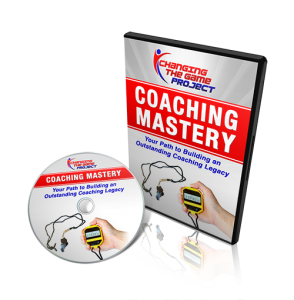
Coach Sullivan is offering a FREE video series which is part of his Coaching Mastery program which includes motivational and team building techniques used by some of the top coaches in the world. To gain access to his free video series click the link below or the image at the left.

Coaching Mastery


Filed Under: Leadership

  • « Previous Page
  • 1
  • …
  • 4
  • 5
  • 6
  • 7
  • 8
  • …
  • 12
  • Next Page »
  • Team Building
  • Mental Skills
  • Leadership
  • Practice Planning
  • Sports Performance
  • Systems
  • Drills
  • Archives

© Copyright 2026 Athletic Performance Toolbox

Design by BuzzworthyBasketballMarketing.com

Privacy Policy