Volleyball Toolbox

  • Home
  • Drills
  • Systems
  • Sports Performance
  • Practice Planning
  • Intangibles
    • Leadership
    • Mental Skills
    • Team Building
  • Shop
  • Archives

Championship Values: Leadership Tool

August 13, 2017 by

By Cory Dobbs, Ed.D.

Values are among the most stable and enduring characteristics of people. They are the foundation on which attitudes and personal preferences are formed. Our core values are crucial in making vital decisions, determining life directions, and behaving in social interactions. Values help define our morality and our conceptions of what is “good” and what is “right.” Many of our behaviors are a product of the basic values we have developed throughout our lives.

However, a problem with values is that they are generally taken for granted. Most of the time people are unaware of their values and how they shape attitudes and behaviors. Unless a person’s value’s are challenged they will remain largely undetected. People are not aware that they hold some values as being more important than others. This unawareness leads to actions or behaviors that are sometimes contrary to values, or even leads to confusion about values.

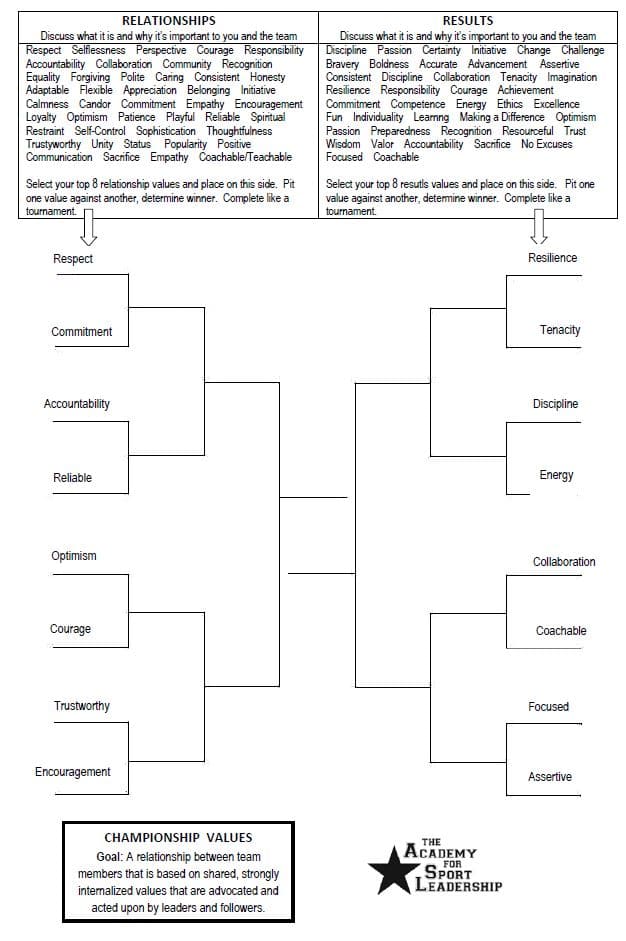
The Championship Values exercise is an interactive tool for you to use in determining your values and those of your teammates. As you work through the eight steps to your team’s Championship Values, keep in mind that sometimes the best way to stimulate discussion of values is to pose a difficult situation that demands a hard look at how a value will help you best resolve the situation. For additional resources for value-driven leadership consider The Academy for Sport Leadership’s
Case Studies.

Step 1 Each team member is to think through the values (Relationship Oriented and Results Oriented) and identify circle the sixteen (8 Relationship / 8 Results) most important values—for you as a member of this team. Be sure to carefully think through just what the value is and why it’s important to you.

Step 2 Fill in the brackets with your eight (8) Relationship Oriented values on the left side and eight (8) Results Oriented values on the right side. Do this exercise individually.

Step 3 Pitting value vs. value tournament style. After placing all sixteen values in the brackets, determine a winner and move the winning values along toward the middle of the chart.

Step 4 Once you’ve completed your Championship Values tournament you’ll have identified your top four values (2 Relationship / 2 Results). Be sure that you’ve thought through the value of each value!

Step 5 Now split your team into triads (groups of three) and discuss the values. As a triad come to an agreement on 16 values and fill out the brackets. This should take some time as you and your teammates will need to work through personal differences to reach shared values.

Step 6 Once you’ve got the 16 shared values begin your tournament. At each stage engage in meaningful conversation to identify a winning value.

Step 7 Once you’ve completed your Championship Values tournament as a triad, begin the same process as a team. When you finish your tournament you will have identified four (the final four values) values that will be strongly internalized, advocated, and acted upon by all team members. The discussion should reveal values a clear-cut set of values for you and your teammates—standards of behavior towards one another and individual and team performance.

Step 8 Do the Championship Values exercise as a complete team. Your goal is a relationship between team members based on shared, strongly internalized values that are advocated and acted upon by all team members.

Click here to download a blank template of the Tool
leadership

To find out more about and order Sport Leadership Books authored by Dr. Dobbs including Coaching for Leadership, click this link: The Academy for Sport Leadership Books

About the Author

A former basketball coach, Cory’s coaching background includes experience at the NCAA DII, NJCAA, and high school levels of competition. While coaching, he researched and developed the transformative Becoming a Team Leader program for student-athletes. Cory has worked with professional athletes, collegiate athletic programs and high schools teaching leadership as a part of the sports experience and education process. Cory cut his teeth as a corporate leader with Fortune 500 member, The Dial Corp. As a consultant and trainer Dr. Dobbs has worked with such organizations as American Express, Honeywell, and Avnet.

Cory has taught a variety of courses on leadership and change for the following universities:

Northern Arizona University (Graduate Schools of Business and Education)

Ohio University (Graduate School of Education / Management and Leadership in Sport)

Grand Canyon University (Sports Marketing and Sports Management in the Colangelo School of Sports Business)

Filed Under: Leadership

Leadership Strategy For Your Team

July 9, 2017 by

This article and other helpful coaching tools can be found at Coach Dawn Writes

By Dawn Redd-Kelly, Head Volleyball Coach at Beloit College.

One of the coaches I work with always says that we’re the CEO’s of our sport…we’re running the show.  So when I ran across this article (Why Every Company Needs a Leadership Strategy), it made me think about all of us head coaches who work so hard to create a winning culture, environment, and winning expectations.

We know we need leaders.  We know we should train them, but how?  Beyond that, do our athletes know our coaching priorities?  What will consider to be “success” at the end of the season?  Is it only winning?  Does winning without honor count?  Do they know why they’re on your team instead of at another school?  If not, we’ve got to create an information/training strategy that ensures that the same information is passed down year after year, team after team.

How about amongst your staff?  Is everyone on the same page as far as what you’re looking for?  Not just positions, but what about personalities?  Do you need more gritty players?  Or maybe enthusiastic players?  How will you tailor your recruiting schpiel to increase the odds of filling your team needs…both tangible and intangible?

There are three requirements for an executable leadership strategy with our teams:

  1. A leadership selection system, to ensure the team gets the leaders it really needs.  How do you pick your captains?  Does the team vote?  Do the coaches decide?  Does the team understand the requirements of being a team captain?  Are they able to opt out?
  2. Leadership development efforts that support leaders so they can adapt to the team’s needs.  Once you’ve got team captains, what training is involved?  How often do they meet with the coaching staff?  Are they given decision-making authority? (It could be something as small as deciding where to eat after the game.)
  3. A succession management process that identifies, accelerates, and supports the identification and accelerated growth of the next generation of leaders. That’s super business-y sounding, but it’s true.  We’ve got to identify future captains and groom them so they’re ready once they’re elected.  What would that process look like? Would it entail formal or informal training?

Personally, I need to think a bit more critically about how me pick, educate, and cultivate leaders on our team.  For many reasons: to make sure we’re being fair, to make sure the staff isn’t blinded by personal bias (sometimes you just love a player, but they’re not ready to be a captain), and to make sure the team buys in to their captains.

I’ll be back next time to discuss a communication strategy from this same article that will help us make sure the entire team is on the same page.


Are you tired of walking into practice and seeing lackluster effort from your players?  Have you had it with trying to get your female athletes to care about the team as much as you do??

Click here to find out more about Coach Dawn’s eBook: Motivating Female Athletes

Comes with a FREE PowerPoint presentation called Guarantee Your Success: Using John Wooden’s Pyramid of Success To Increase Your Team’s Cohesion.


Filed Under: Leadership

Does Your Team Have Grit?

June 11, 2017 by

This article can be found at the Coaches Toolbox, a great resource for coaches of all sports

Living with a 99% Effort

I got this list from entrepreneur and business author Harvey Mackay’s book “Dig Your Well Before You’re Thirsty.” (If you click on the name of the book, you can see a portion of the book from Amazon) In the book, he gives credit to Armond Bouchie for using this list in his job application portfolio.

If we had to live with 99% effort, we would have:


One hour of unsafe drinking water every month,

Two unsafe plane landings per day at Chicago’s O’Hare Airport,

16,000 pieces of lost mail every hour,

22 checks deducted from the wrong bank account every week,

500 incorrect surgical operations every week,

12 babies given to the wrong parents every day,

20,000 incorrect drug prescriptions each year, and

800,000 credit cards with incorrect information.

A 100% effort makes sense.


This next portion of the post contains some of my takeaways from Texas A&M Women’s Assistant Bob Starkey’s Coaching Blog Hoop Thoughts Blog

HOW DO YOU MEASURE ON THE “GRIT” SCALE?

Mitch Cole

Some educational researchers have defined GRIT as “passion and perseverance to achieve long term goals”. When struggles come, do you get more DEJECTED or more DETERMINED?

Studies have shown that the attribute of GRIT, is one of the most powerful indicators of success. The most GRITTY people usually succeed on and off the playing field or court.

Teams can become selfish during good times and turn on each other during tough times. Teams that stay together can resist the temptation to be selfish, can withstand tough times, and even conquer insurmountable odds.

Most people can appreciate a team or athletes that refuse to give up no matter what the circumstance. Resilience is the ability to bounce back from difficulty and in some cases, be better than before. This can happen when the other team goes on a run and things look most bleak, or even within a season. Teams that “Fight” and show tremendous Resilience over and over again have the best chance for sustained success.

When winners get knocked down, they get up, champions get up a little faster.

“Being relentless means constantly working for that result, not just when drama is on the line. Clutch is about the last minute. Relentless is about every minute.” -Tim Grover From “Relentless: From Good to Great to Unstoppable”

U of Penn Duckworth Lab study found that “grit” (passion & perseverance for long-term goals) is best predictor of success. “Grit is unrelated w/ talent.”

The Duckworth Lab focuses on two traits that predict success in life: grit and self-control. Grit is the tendency to sustain interest in and effort toward very long-term goals. Self-control is the voluntary regulation of behavioral, emotional, and attentional impulses in the presence of momentarily gratifying temptations or diversions. On average, individuals who are gritty are more self-controlled, but the correlation between these two traits is not perfect: some individuals are paragons of grit but not self-control, and some exceptionally well-regulated individuals are not especially gritty. While we haven’t fully worked out how these two traits are related, it seems that an important distinction has to do with timescale: As Galton suggested, the inclination to pursue especially challenging aims over months, years, and even decades is distinct from the capacity to resist “the hourly temptations,” pursuits which bring momentary pleasure but are immediately regretted.

In terms of Big Five personality, grit and self-control both load on the conscientiousness factor, which also encompasses dependability, punctuality, and orderliness, among other facets.

Some educators typically prefer the umbrella term “social and emotional learning,” whereas many other educators, as well as philosophers and positive psychologists, embrace the moral connotations of “character” and “virtue.” So, grit and self-control are facets of Big Five conscientiousness, but are also conceptualized as dimensions of human character, social and emotional competency, and non-cognitive human capital.

That Extra Effort

For another angle on the importance of a 100% effort, click on the image below for a very inspirational video:

think you are really going to like this video that shows us that there is not a lot of physical difference between top performers and also rans. The big difference is in their mental strength and persistence! Click on the icon to see the video. You will need scroll to the bottom of the page after you click.


Filed Under: Leadership, Professional Development

Know Your Coaching Personality

April 27, 2017 by

By Dawn Redd-Kelly

I think personality assessment should be a must for every team. Why? Because I think the cause of most conflict is expecting others to act like you do. I’d written before about the DiSC assessment I use, focusing on your team’s interactions with one another. Now I want to talk about coach-player interaction. Even though most people are a mixture of more than one letter type, see if you can find your top one or two personality types here. I believe it will help you as you work with your student-athletes.

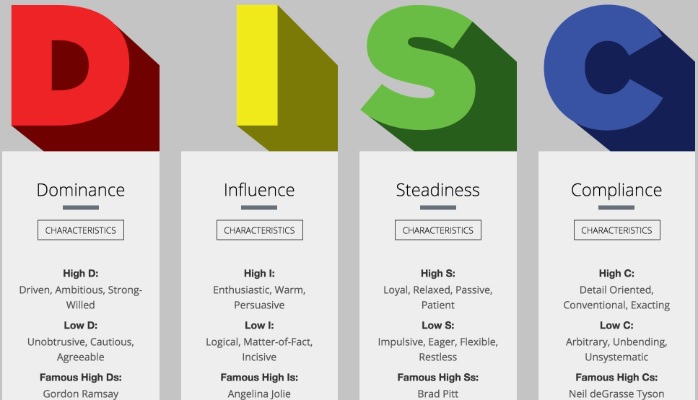
The 4 DiSC personality types and how they impact your coaching style

D’s are dominant and like to be in charge. I’d hazard a guess that a lot of coaches are D’s. On the positive side, D’s enjoy solving problems and trust their ability to produce results. At their best, D’s can mobilize teams to solve a problem or achieve a goal. That sounds awesome right? As Newton said though, for every action there is an equal and opposite reaction. D’s can be blunt to the point of being rude and may make rash and reckless decisions. At their worst, D’s can be bullies, loud mouths, and tyrants.

What to do: Understand that not everyone thinks as quickly as you do…give them time to mull things over. D’s could do well to build bridges and relationships rather than expecting people to comply just because they say so. I mean, your team will comply because you’re the boss. But if you want your team to play for you and not in spite of you, D’s should see the value of cooperation.

I’s are influential and the life of the party. These are your extroverted folks who love to be around people. I’s are charming, optimistic, and outgoing…those we’d call a “people person”. At their best, I’s can be inspirational and communicate a vision or goal in a manner that motivates others to work toward it. I’s see the best in others and help them to believe in their abilities. Sounds like an awesome coach, huh? On the other side of the coin, I’s dislike details and can seem scattered. I’s can sometimes lack follow-through, rarely finishing what they begin…they overpromise and underdeliver.

What to do: Understand that you can get folks super fired up with your words…so that means that you’ve got to deliver on those promises. You don’t want to have a group of ten freshmen who you told would be starters…and your sport only starts five! I’s should try to listen more and talk less.

S’s are the steady Eddy’s out there. S’s are loyal, friendly, and supportive…they are team players. At their best, S’s can calm tensions and stabilize unsettled situations. S’s work hard to create stable and harmonious environments. Does this sound like you, Coach? Well, on the flip side, S’s are too hard on themselves and take criticism other their work very personally. Creatures of habit, S’s enjoy their daily routines and are resistant to change.

What to do: Understand that flexibility is the name of the game. It’s great that S’s will have a routine and a to-do list prepared for each day…you’ve just got to be prepared for things to go sideways every now and then. One of your players might get sick (on the day where she’s a big part of your practice plan!) or it may rain when you were planning on taking your team outside. S’s can have their beloved plans…just be willing to adjust it.

C’s are conscientious and careful. If you’re a C, you like to be right and are a stickler for details. You have very high standards for yourself…and those around you. Where I’s are outgoing and boisterous, C’s are quiet, reserved, and business-like. C’s are fair and objective and will always maintain high standards, even when asked to compromise. That’s pretty good, right? At their worst, C’s can get bogged down in details…some would call them a nit picker. C’s prefer to work alone and need to analyze all available options before making a decision.

What to do: C’s should understand that some decisions have a timeline and need quick action. Your assistants understand that you’ve charted stats for all practices during the season and the numbers say that you’ve got the right lineup out there. But right now it’s not working and you’ve got to make a change. C’s are cautious by nature, so you should surround yourself with folks who are more adventurous.

Each season, we try to create team chemistry among our athletes and help them to get to know one another, but it’s just as important that the coach knows their personality type…and how it’ll interact with each player.

source


Are you tired of walking into practice and seeing lackluster effort from your players?  Have you had it with trying to get your female athletes to care about the team as much as you do??

Click here to find out more about Coach Dawn’s eBook: Motivating Female Athletes

Comes with a FREE PowerPoint presentation called Guarantee Your Success: Using John Wooden’s Pyramid of Success To Increase Your Team’s Cohesion.


Filed Under: Leadership, Professional Development

Two-Way Communication Creates Winning Culture

April 12, 2017 by

This article was provided by Coaches Network

Nearly every athletics program—whether it a college or high school program—hopes to create a lasting culture of winning and success. Regardless of the size of the school or the level of competition, coaches are searching for ways to foster sustainable growth on their teams. Most coaches look to assert their own methods and philosophies when it comes to developing a team culture, but for Hope College’s Head Volleyball Coach Becky Schmidt it’s all about striking a balance with the players.  And Coach Schmidt’s system is one for high school coaches to emulate.

Schmidt’s 12-season coaching record at Hope is 326-79, with her total collegiate record being 364-112, ranking her among the nation’s elite
volleyball coaches. In 2014 she guided the Flying Dutch to their first national championship with a 6-0 run during the NCAA Division III Tournament. She continued to build on that success this past year with a 24-6 overall record during the regular season.

The success that Schmidt has sustained at Hope is a prime case study for developing a positive team culture. Through years of experimenting with different approaches, Schmidt has kept an open mind and has found the coaching style that works best for her team.

“Too often coaches think that it’s all or nothing, it’s this one way or the highway,” she says. “But I really believe the coaches that are providing the most positive cultures are those that are aware of the balance that they need to strike in the multiple ways that their program operates.”

Talking to players and asking them for suggestions is the primary tool that Schmidt has used to improve Hope’s volleyball program. “I would recommend having a clear vision of what you want to see from your team but also talking to them and asking them what they want to see from their experience as well,” she says.

Opening this line of communication with the student-athletes has helped Schmidt take the steps to improve in multiple areas. One thing that has changed over the years is the way she runs her practices. “As a coach you’ve got to balance being focused on a specific drill and also having a good time and enjoying the experience,” she says. “So the drill can’t be so hard that it become frustrating and cant be so easy that the athlete becomes bored.”

This has led Schmidt to change her coaching style over the years. Whereas she used to include dozens of different drills for each skill, now she has her players work on only a handful of drills that replicate in-game situations. Players are also given a chance to redeem themselves after making mistakes during certain drills. “The focus there is on not making the same mistake twice,” says Schmidt. “So there’s a technique piece of it but there’s also an attitude or a mindset piece.”

Fostering positive relationships with the student-athletes has helped Schmidt maintain the strong team culture that she has developed. There has to be fairness from you and trust from the players,” she says. “You can’t treat one player in a way that’s not fair for the rest of the team but I think every team is going to understand that players are different, what gets one person to be able to excel might be very different for someone else.”

Developing respect and trust from players is essential for any coach looking for long-term success. Schmidt recommends that coaches share their vision with the team while also collecting feedback from players so that everyone understands each other. It may not happen over night, but these methods will certainly help to foster the growth of a positive team culture.

“By talking to the student-athletes and showing a little bit of vulnerability they’re going to learn to trust you more,” she says. “When they see that you actually care about their perspectives and what their experience is like then you get a few allies on a team and you’re much closer to getting to a tipping where that culture then really starts to shift.”


Filed Under: Leadership, Professional Development

  • « Previous Page
  • 1
  • …
  • 6
  • 7
  • 8
  • 9
  • 10
  • …
  • 12
  • Next Page »
  • Team Building
  • Mental Skills
  • Leadership
  • Practice Planning
  • Sports Performance
  • Systems
  • Drills
  • Archives

© Copyright 2026 Athletic Performance Toolbox

Design by BuzzworthyBasketballMarketing.com

Privacy Policy